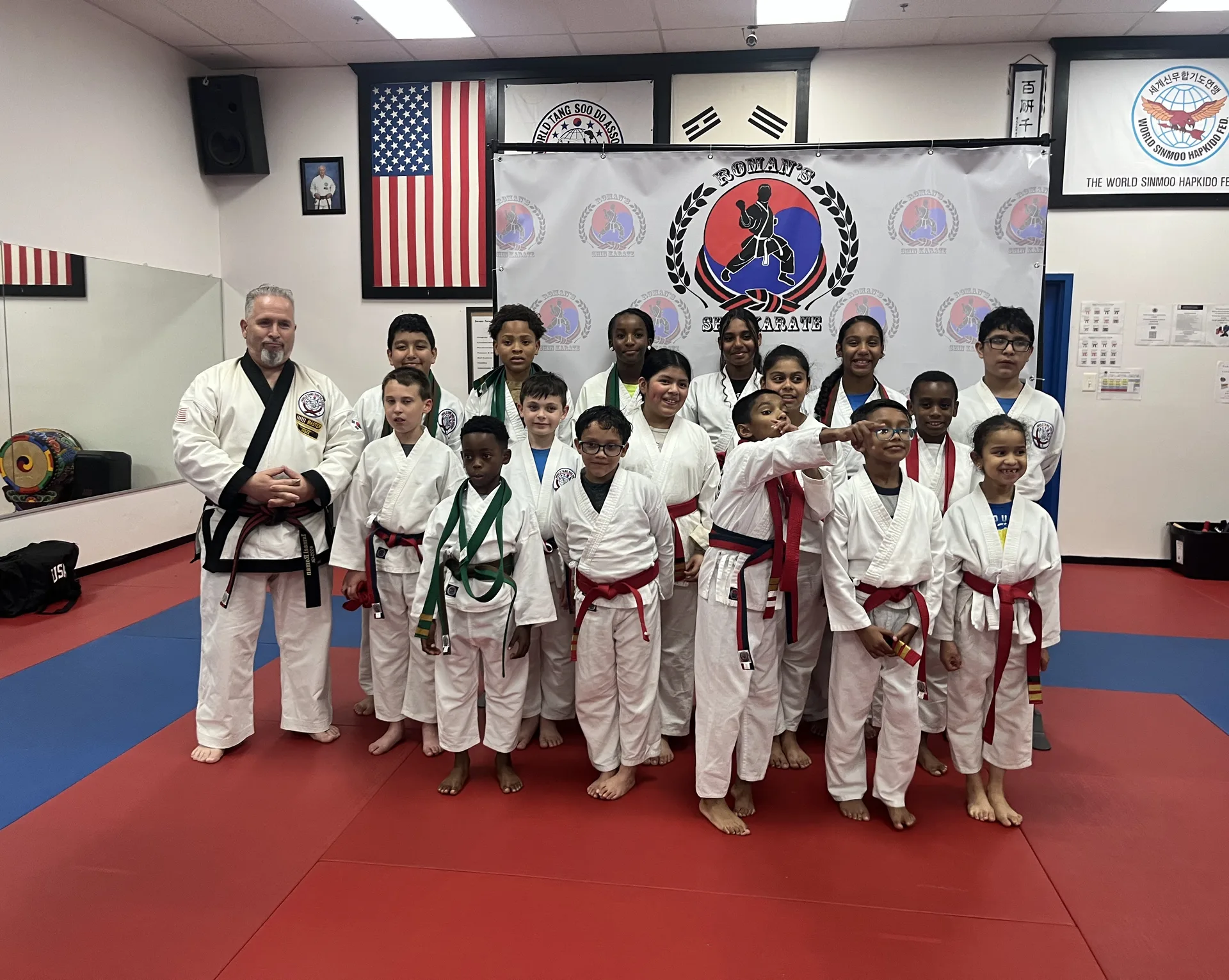
As a parent in the Hamilton, NJ area, you are always looking for activities that will help your child grow into a confident, respectful, and capable young adult. You may have considered martial arts, but the term itself can be confusing. Is it all the same? Does the specific style matter? The answer is a resounding yes. The philosophy and techniques behind a martial art define the lessons your child will learn, both on and off the mat.
At Roman's Shin Karate, we are deeply proud of our foundation in Tang Soo Do, a traditional Korean martial art with a rich history and a profound impact on its students. Understanding what Tang Soo Do is will help you see why it is such a powerful tool for child development. It is more than just kicking and punching; it is a path to self-improvement, a way of life that instills discipline and character.
This guide is for parents like you. We will explore the origins of Tang Soo Do, what makes it unique, and how its principles directly translate into the positive traits you want to nurture in your child. We want you to feel confident that when you enroll your child with us, you are not just signing them up for an after school activity. You are connecting them to a legacy of excellence that builds leaders.
What is Tang Soo Do? The Way of the Chinese Hand
Let’s start with the name itself. Tang Soo Do (당수도) is a Korean phrase. It provides the first clue to the art's identity.
- Tang (당): Refers to the T'ang Dynasty of China (618-907 AD). This acknowledges the historical influence of Chinese martial arts on the development of Korean fighting styles.
- Soo (수): Means "hand." This signifies that it is primarily an empty-hand system, focusing on blocks, strikes, and punches.
- Do (도): Means "the way" or "the path." This is the most important part. It elevates Tang Soo Do from a mere fighting system to a complete way of life, emphasizing philosophical and moral development alongside physical training.
So, Tang Soo Do translates to "The Way of the Chinese Hand." It is often called traditional Korean karate due to its shared roots and similar appearance to some Japanese styles. However, it is distinctly Korean in its execution, forms, and philosophy.
Tang Soo Do is a balanced martial art. It incorporates hard, external elements like powerful kicks and strong blocks, with soft, internal elements like controlled breathing, concentration, and fluid movement. Unlike some modern martial arts that have become heavily sport-oriented, Tang Soo Do maintains a strong focus on practical, effective self-defense. The goal is not to win points in a tournament, but to develop the skills and mindset to protect oneself and de-escalate conflict whenever possible.
Our Direct Lineage: From Ancient Korea to Hamilton, NJ
A martial art is only as strong as its lineage. The authenticity and quality of instruction are passed down from master to student. At Roman's Shin Karate, we have a direct, unbroken connection to the very founder of the World Tang Soo Do Association (WTSDA), a lineage that no other school in our area can claim.
The Birth of Modern Tang Soo Do
The roots of Tang Soo Do stretch back centuries to ancient Korean fighting styles like Subak and Kwon Bop. The modern art we practice today was systematized by Grandmaster Hwang Kee. After World War II, he founded the Moo Duk Kwan ("Institute of Martial Virtue"), one of the most important original schools of Korean martial arts.
The Vision of Grandmaster Jae Chul Shin
One of Grandmaster Hwang Kee’s most distinguished students was the late Grandmaster Jae Chul Shin. A true visionary, Grandmaster Shin brought Tang Soo Do to the United States and founded the World Tang Soo Do Association in 1982. His goal was to create a global organization that preserved the traditional, non-political nature of the art while fostering a family-like community. He was a legendary figure, known for his incredible skill, deep knowledge, and unwavering integrity. He was also famously the first Korean instructor to a young American airman named Chuck Norris while he was stationed in South Korea. Yes, the lineage we teach is the same one that trained a martial arts icon.
Carrying the Torch in Hamilton
This is where our school's story becomes personal. As the Chief Master of Roman's Shin Karate, I, Ismael Roman, had the distinct honor of testing for and receiving my 5th Degree Black Belt (Dan) directly from Grandmaster Shin himself in 2016. This was a profound moment, connecting our school in Hamilton directly to the founder of our global association. I began my own journey in 1978, and that lineage is something I am committed to preserving. When your child trains here, they are not just learning from a book; they are receiving instruction passed down through an authentic and prestigious line of masters. Our school carries on a long legacy of teaching authentic Tang Soo Do in the Hamilton and Trenton communities.
More Than Kicking: The Core Tenets of Tang Soo Do
The physical techniques of Tang Soo Do are the vehicle, but its core tenets are the destination. These principles are woven into every class, every instruction, and every interaction on the mat. They are what transform a physical practice into a character-building journey.
- Integrity: We teach our students to be honest, to stand up for what is right, and to live by a strong moral code. On the mat, this means practicing with honesty and never cheating on a push-up or a technique.
- Concentration: Learning complex forms (Hyung) and one-step sparring requires immense focus. This skill of blocking out distractions and focusing on the task at hand is one of the most valuable benefits, directly helping kids with their schoolwork and homework. This is a key part of `improving focus`.
- Perseverance: Students learn that progress is not always easy. They will struggle with a new kick or a difficult form. We teach them to push through challenges, to never give up, and to understand that true achievement comes from overcoming adversity.
- Respect and Obedience: Students learn to bow to the flags, to the instructors, and to each other. This is not about blind obedience, but about showing gratitude for the teachings and acknowledging the worth of others. This translates to better respect for parents, teachers, and elders at home and in school.
- Self-Control: A martial artist learns powerful techniques, but the most important lesson is when *not* to use them. We drill into our students that martial arts are for self-defense only. This teaches emotional regulation and impulse control, crucial skills for navigating childhood and adolescence.
- Humility: No matter how skilled a student becomes, there is always more to learn. We foster an environment free of ego, where students are encouraged to help each other and celebrate their peers' successes.
What a Tang Soo Do Class at Our School Looks Like
If you're considering enrolling your child, you probably wonder what they will actually do in a class. While every class is different, they follow a consistent structure designed for optimal learning and safety.
- Formal Opening: We begin every class by lining up, bowing, and reciting the student creed. This sets a respectful and focused tone from the very start.
- Warm-Up and Stretching: We lead students through dynamic stretches and light cardio to prepare their bodies for training and prevent injuries.
- Basic Techniques (Ki Cho): This is the foundation. Students practice their stances, blocks, punches, and kicks in a group setting. Repetition builds muscle memory and refines technique.
- Forms (Hyung): Forms are pre-arranged sequences of movements against an imaginary opponent. They are a cornerstone of Tang Soo Do training, teaching balance, focus, power, and flow.
- One-Step Sparring (Il Soo Sik): In a controlled, partnered drill, one student attacks with a single technique, and the other responds with a pre-arranged defense and counter-attack. This builds reflexes and timing in a safe environment.
- Practical Self-Defense: We also practice specific techniques for real-world scenarios, such as escaping grabs. These `self-defense skills` are taught with a focus on safety and control.
- Cool-Down and Mat Chat: We end class with a cool-down and a brief talk, reinforcing one of the core tenets or sharing a lesson for the day. We finish with a formal closing and bow.
This structure ensures a well-rounded session that develops physical skills, mental focus, and strong character.
A Story of Transformation
We see the benefits of this practice every day. One parent from nearby Mercerville shared a story that truly captures the spirit of Tang Soo Do. Their son was extremely shy and would barely speak in new situations. After just a few months in our program, they were stunned. He wasn't just participating; he was raising his hand to answer questions and even volunteering to lead parts of the warm-up. That journey from timid to confident is the real magic of martial arts, and it's a testament to the power of `building confidence` through consistent effort and a supportive environment.
Frequently Asked Questions About Tang Soo Do
Parents often have excellent questions when they first contact us. Here are some of the most common ones.
Is Tang Soo Do a good martial art for kids?
Absolutely. Tang Soo Do is exceptionally well-suited for children. Its structured curriculum is easy for kids to follow, while the focus on discipline and respect provides the character-building parents are looking for. It is a fantastic outlet for energy that also teaches valuable life skills. We even have a dedicated `Little Dragons program` for our youngest students, ages 3-5, to build a strong foundation.
What is the difference between Tang Soo Do and Taekwondo?
This is a very common question. While both are Korean arts, their focus differs. Taekwondo has evolved into a dynamic, Olympic-style sport with a heavy emphasis on high, fast kicks for scoring points. Tang Soo Do remains a more traditional, balanced art focused on practical self-defense, incorporating hand techniques, blocks, and lower, more powerful stances just as much as kicks.
How effective is Tang Soo Do for self-defense?
Tang Soo Do is highly effective for self-defense. Because it has not been diluted for sport competition, its techniques remain practical and powerful. It teaches students to block attacks, counter-strike effectively, and maintain a stable base. More importantly, it teaches the awareness and confidence to avoid dangerous situations in the first place.
What does the belt system mean?
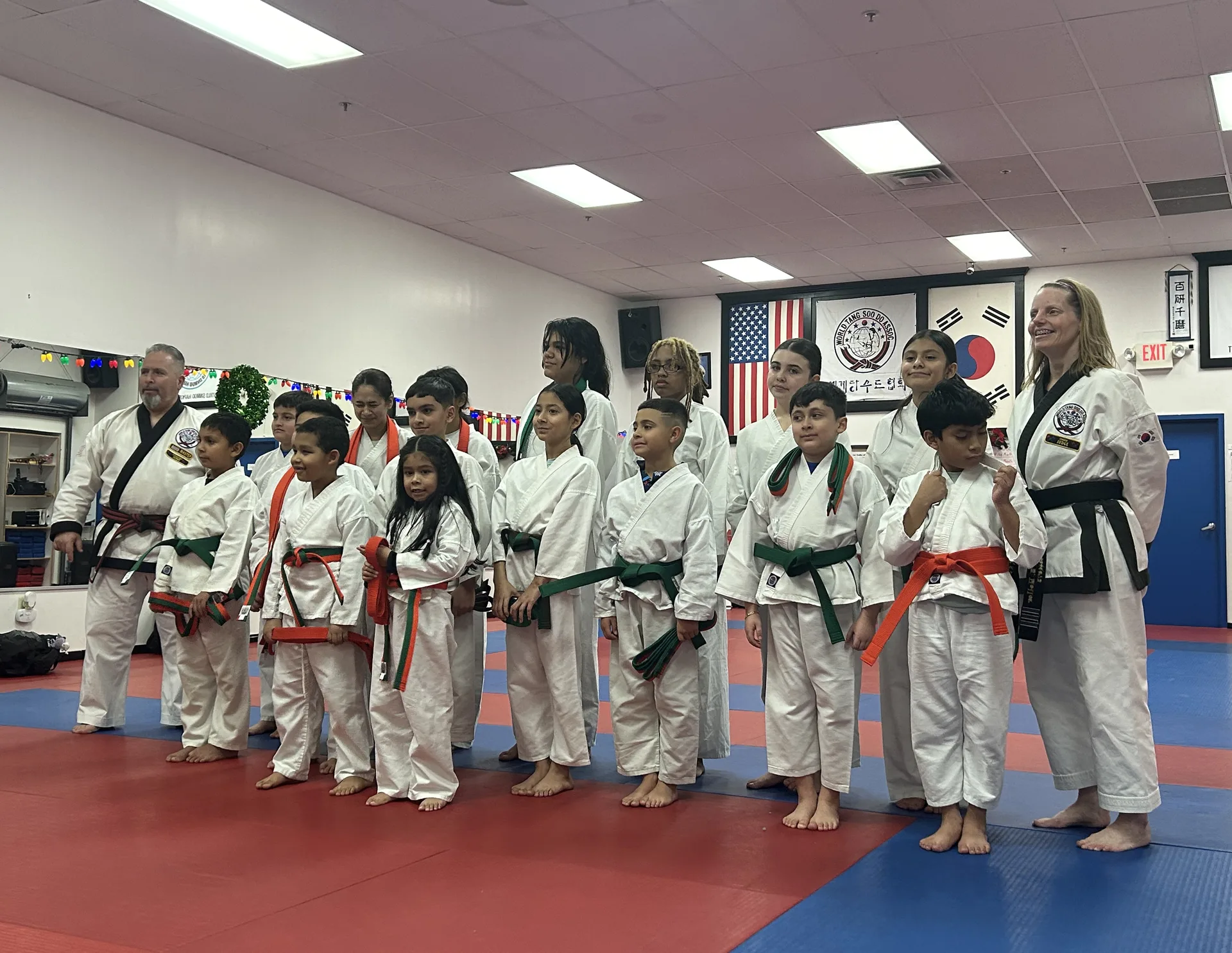
The belt system is a visual representation of a student's progress and journey. A student begins as a white belt, symbolizing a mind empty and ready to learn. As they train and master new material, they progress through a series of colored belts (like orange, green, and red) until they are ready to test for their black belt. The black belt does not signify the end of the journey, but rather the beginning of a new chapter of advanced learning and leadership.
Begin Your Child's Journey Today
Understanding what is Tang Soo Do is the first step. It is a traditional Korean martial art built on a philosophy of self-improvement, backed by a direct lineage to its creators, and dedicated to building stronger, more confident individuals. It is an art that teaches a child not only how to stand up for themselves, but how to stand for something bigger: integrity, respect, and perseverance.
For families in Hamilton, Bordentown, and Yardville, our dojang offers more than just a class; it offers a community and a connection to this powerful tradition. We invite you to see the difference for yourself.
Ready to give your child the gifts of confidence and discipline? We encourage you to `contact us` to learn more about our introductory programs or to schedule a visit to our school on South Broad Street. We look forward to welcoming you to the Roman's Shin Karate family.
New Student Experience
Ready to See It In Person?
4 Weeks Unlimited Classes — $129 $49
Keep Reading
Parenting
How to Choose the Right Martial Arts School in Hamilton NJ: A Parent's Guide
Self-Defense
Hapkido Self-Defense: Why Technique Overcomes Strength Every Time
Parenting
Best Age to Start Karate: A Hamilton Parent’s Complete Guide
Child Development